




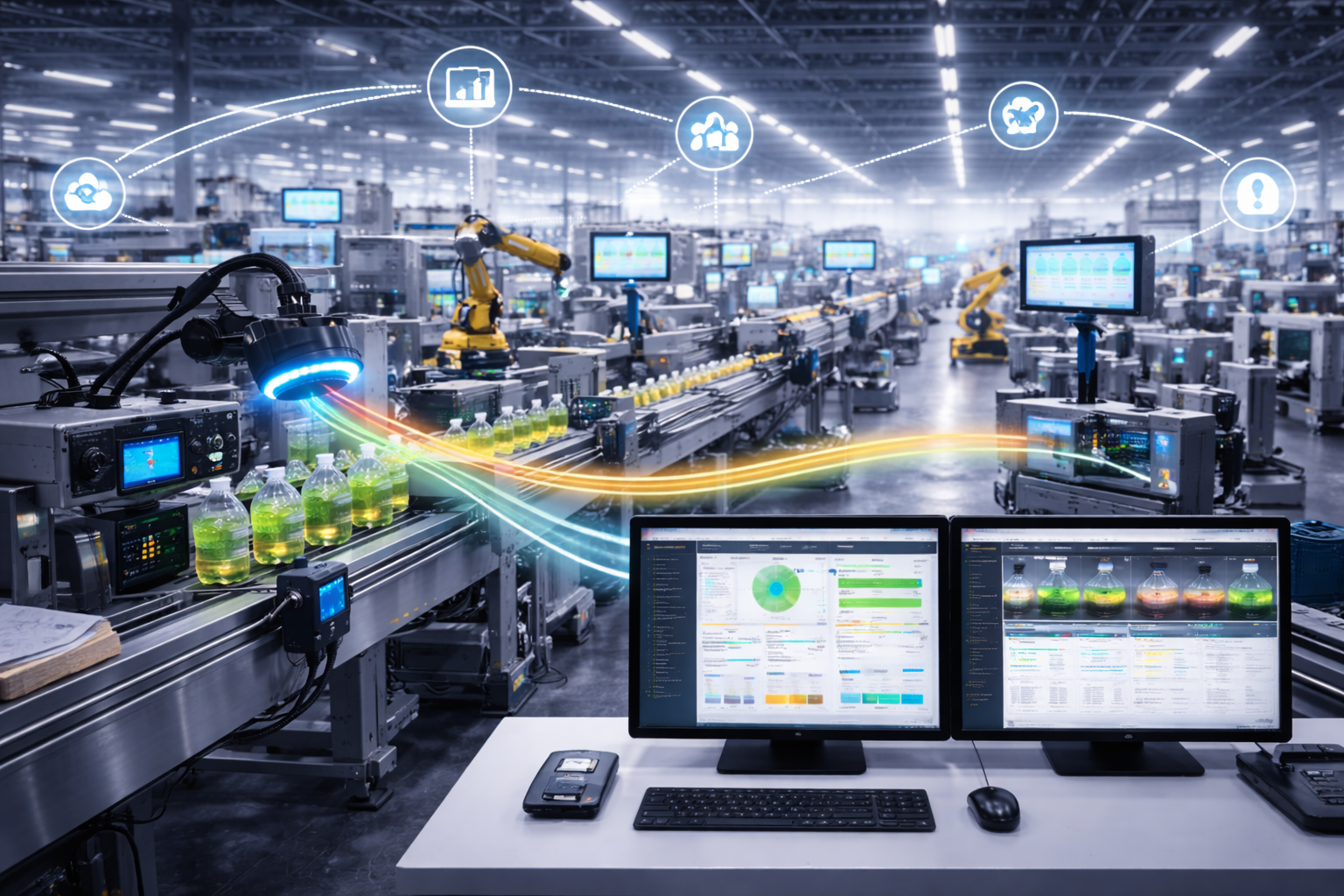
From Shop Floor to Boardroom | Manufacturing Data Flow in Industry 4.0
From Shop Floor to Boardroom – Turning Manufacturing Data into Strategic Insight
In modern manufacturing, data no longer belongs only to the shop floor. In Industry 4.0 environments, production data flows seamlessly from machines and inspection systems all the way to management dashboards and executive decision-makers.
This end-to-end manufacturing data flow enables organizations to move from operational visibility to strategic intelligence.
Ejabi for Reliable Applications enables this transformation by integrating MES, machine vision inspection systems, RFID, and enterprise platforms, ensuring that accurate, real-time production data reaches every level of the organization.
What Is Manufacturing Data Flow?
Manufacturing data flow refers to the structured movement of data from:
- Machines and sensors
- Inspection and quality systems
- Shop floor operators
- MES and production systems
Up to:
- Management dashboards
- ERP and enterprise systems
- Quality and compliance reporting
- Executive decision-making tools
This flow ensures alignment between operational execution and business strategy.
Data Sources on the Shop Floor
In a smart factory, data is continuously generated by:
- Machine vision inspection systems
- Production equipment and PLCs
- MES work order execution
- RFID and traceability systems
- Operator inputs and events
This data reflects the real-time state of production, quality, and performance.
MES as the Data Aggregation Layer
The Manufacturing Execution System (MES) acts as the central hub that:
- Collects real-time shop floor data
- Correlates data with batches, orders, and machines
- Structures raw data into meaningful context
- Enforces production and quality workflows
MES transforms raw signals into usable manufacturing intelligence.
From Operational Data to Business Intelligence
Once data is structured in MES, it can be shared with:
- ERP systems
- Quality Management Systems (QMS)
- Analytics and BI platforms
This enables management to monitor:
- Production efficiency and OEE
- Quality trends and defect rates
- Compliance status
- Resource utilization
Executives gain real-time visibility instead of relying on delayed reports.
Role of Inspection and Quality Data
Quality data from machine vision inspection systems is a critical part of manufacturing data flow.
Inspection data enables:
- Early detection of quality risks
- Root cause analysis
- Continuous improvement tracking
- Audit-ready quality reporting
When quality data flows to management, decisions are made proactively instead of reactively.
Strategic Benefits of End-to-End Data Flow
A connected data flow from shop floor to boardroom enables:
- Faster and more accurate decision-making
- Alignment between production and business goals
- Reduced operational risks
- Improved compliance and traceability
- Data-driven continuous improvement
Manufacturing Data Flow in Industry 4.0
Industry 4.0 depends on:
- Real-time connectivity
- System interoperability
- Data transparency
Manufacturing data flow is the foundation that allows smart factories to operate as intelligent, adaptive systems rather than isolated production lines.
Why Choose Ejabi for Reliable Applications?
Ejabi enables end-to-end manufacturing data flow by integrating:
- MES and shop floor systems
- Machine vision inspection
- RFID and traceability technologies
- Enterprise and analytics platforms
We ensure that the right data reaches the right people at the right time.
Align Operations and Strategy with Data
Manufacturers that connect shop floor data to management decision-making gain a powerful competitive advantage.
Ejabi for Reliable Applications helps organizations build transparent, data-driven manufacturing environments aligned with Industry 4.0 and smart manufacturing strategies.